Issue 20
Image
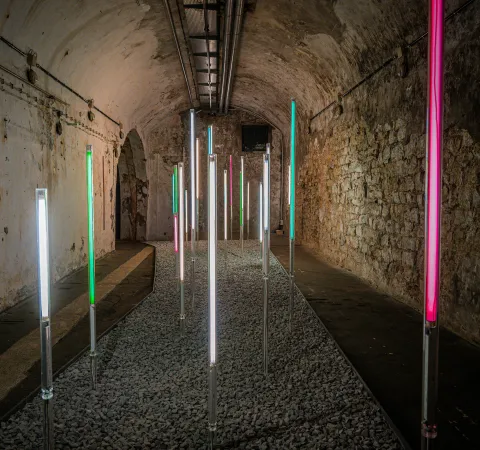
Colorful illuminated LED tubes standing upright on a gravel path inside a weathered stone tunnel or vaulted corridor, creating a light installation in a historic space.
Rhetorics of Visibility
2015

"The shot fake as a gesture requires imagination of possible futures to be used effectively. To fully understand how the shot fake rhetorically functions, we cannot think of gesture as merely an unimaginative part of a delivery or as secondary to voice or oral language. Gestures like the shot fake are inventive, arranged, even stylized; they are creative rhetorical acts in their own right."

—Matthew Newcomb, "The Persuasiveness of the Shot Fake"
Photo by Julia Taubitz on Unsplash
Articles

Sarah Orem and Neil Simpkins
Within the span of a few months, from late 2013 to mid-April 2014, a cascade of op-eds began appearing in web magazines and newspapers decrying the threat of a new public enemy: trigger warnings, textual tags attached to a variety of media that alert readers and viewers that the ensuing material could spur a mental health crisis.
Scot Barnett
Recent years have seen an increasing (re)turn to materialities in rhetoric and the humanities. Under the banners of object-oriented ontology, speculative realism, new materialism, the posthumanities, and related paradigms, theorists from rhetoric and other disciplines have begun to revisit the question of materiality as a way to rethink assumptions about language, knowledge, agency, and subjectivity rooted in the humanist tradition.
Jennifer Clary-Lemon
In what follows, I map a material-rhetorical approach to analyzing contemporary museum sites, in particular the Canadian Museum for Human Rights, drawing on Vicki Tolar Burton’s notion of rhetorical accretion, and the heuristic work of Carole Blair with memorial sites. By bringing the work of these scholars together, I demonstrate that reading museum sites with material methodology in mind results in tactics for invention that emphasize networks over discrete discursive elements.
Gale Coskan-Johnson
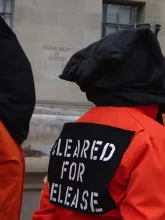
This article is about ways of reading and ways of writing within and against dominant contemporary US public discourses. The article responds to narratives that circulate in and emerge from post-9/11 discourses of terrorism that have produced, proliferated, and normalized terms such as indefinite detention, enteral feeding, black site, and enemy combatant. Specifically, it provides a critical examination of the rhetorical practices of one JTF-GTMO detainee as they emerge from the gaps, fissures, and silences of hegemonic narratives.
Justin Lewis
This article tries to better understand what Kenneth Burke calls "instrumental causes" or technological tools that mediate human desire. Functioning as conduits that link humans to their lifeworld, instrumental causes are underwritten by agentic capacities imbued over long histories of cultural-historical use; further, as mediating technologies, digital tools provide creative solutions to the contradictions that develop from destabilizations in any activity system.
Matthew Newcomb
The shot fake is fundamentally rhetorical. It is one individual taking action to cause a particular change in movement in another. For the split second that a defender falls for the fake, the person is doing exactly what he or she thought best at that moment based on the message being gestured by the ball-handler. That feeling goes away once the shot is recognized to be a fake, but the movements of the fake shot, which I discuss in this essay, can be read in the context of a basketball game as a persuasive action.

Reviews

Published August 31, 2015

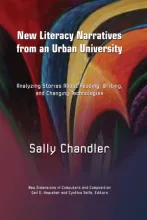
Sally Chandler with Angela Castillo, Maureen Kadash, Molly D. Kenner, Lorena Ramirez and Ryan J. Valdez, New Literacy Narratives from an Urban University: Analyzing Stories About Reading, Writing, and Changing Technologies, Hampton Press, 2013, 361 pages, ISBN: 9781612891194

Coauthors
Johanna Schmertz, University of Houston-Downtown
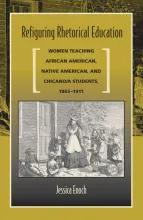
Feminist historiography is a method for "seeing" how women are represented within patriarchal structures and gender hierarchies. It examines the ways in which gender ideology and society has disciplined the subject position of womanhood and regulated the rhetorical behavior of women within the ‘perceived’ dominant discourse of the symbolic.
Coauthors
Romeo Garcia, Syracuse University

Published January 31, 2016

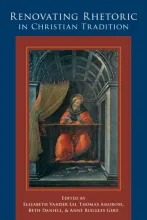
Elizabeth Vander Lei, Thomas Amorose, Beth Daniell, and Anne Ruggles Gere, Renovating Rhetoric in Christian Tradition, University of Pittsburgh Press, 2014, 224 pages, ISBN: 9780822962946

Coauthors
Matthew Boedy, University of North Georgia

Published 21 May 2015

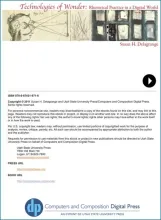
Susan H. Delegrange, Technologies of Wonder: Rhetorical Practice in a Digital World, Computers and Composition Digital Press/Utah State University Press, 2011, ISBN: 9780874218718, http://ccdigitalpress.org/ebooks-and-projects/wonder

Coauthors
Elizabeth Edwards, Washington State University

Published February 8, 2016

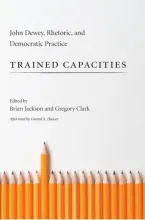
Brian Jackson and Gregory Clark, editors, Trained Capacities: John Dewey, Rhetoric, and Democratic Practice, University of South Carolina Press, 2014, 280 pages, ISBN: 9781611173185

Coauthors
Trevor C. Meyer, University of South Carolina