
Issue 19
Image
A glossy, iridescent brain-like form surrounded by colorful translucent flowers and floating bubbles against a black background.
Mediated Witnessing
2015

"Lived events generate affective spontaneity and proprioception of one's body in collective action with other bodies for the purposes of producing political and social art."

—Phil Bratta "Rhetoric and Event: The Embodiment of Lived Events"
Photo by julien Tromeur on Unsplash

Articles

Jonathan W. Stone
In this essay, I bring together conversations about the power of recorded voice, decentered rhetorical historiography, and an ethic of multimodal listening to study a shift in cultural history when technological development made a variety of sounds (and particularly music) more accessible to the public, thereby influencing the ways that sonic material culture could circulate and have influence.
Julie Prebel
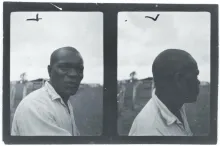
In this article, I read Farnham’s phrenological sketches and photos as emblematic of a distinctive moment in the scientific history, traced by Lisa Cartwright and others, of surveillant looking and physiological analysis, one means of diagnosing, classifying, and maintaining control over subjects deemed diseased, aberrant, or criminal.
Chris Mays
Rice’s point here highlights an important aspect of what she calls rhetorical “ecologies”: that they move. Constantly in flux, our rhetorical actions and reactions are always caught up in an evolution that Rice shows to be vibrant, unceasing, and above all, worthy of our theoretical and pedagogical attention.

Reviews

Published April 21, 2015

Review of Collaborative Approaches to the Digital in English Studies Edited by Laura McGrath. Computers and Composition Digital Press/Utah State University Press, 2011, ISBN: 9780874218879
 

Cover image Collaborative Approaches to the Digital in English Studies


Coauthors
Dev Bose, Iowa State University
This review argues that Buchanan’s Rhetorics of Motherhood shows how “motherhood” operates as a powerful cultural and rhetorical code that can both empower and marginalize women, though the reviewer critiques its limited attention to race and uneven treatment of rhetorical “success.”
Coauthors
Jessie Richards