
Issue 14
Image
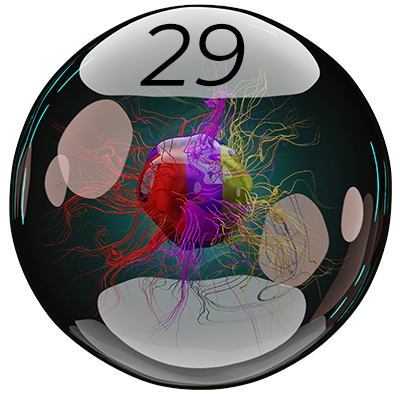
assorted red geometric shapes set against a black background
Computers & Writing 2012, ArchiTEXTure
2012

"When as scholars we push the limits of what composing can be, we find new ways to construct our stories and experiences with the many forms of media available to us: sound, video, code, and light, to name just some . . ."

—Megan Kittle Autry and Ashley R. Kelly, "Introduction to the Special Issue: Computers & Writing 2012, ArchiTEXTure"
Steve Johnson For Unsplash+
Articles

Meagan Kittle Autry and Ashley R. Kelly
Computers and Writing 2012 took place in Raleigh, NC, hosted by the First Year Writing Program and the doctoral program in Communication, Rhetoric, and Digital Media at North Carolina State University. This year’s theme, “ArchiTEXTure: Composing and Constructing in Digital Space,” asked contributors to think about how we compose digital texts for our research and our teaching, and to consider the challenges, benefits, and other issues related to the construction of texts in these changing and emerging spaces.
Vyshali Manivannan
As the gap between social media and 4chan continues to widen, it becomes increasingly important to interrogate modes of being online as experiences. Knuttila suggests that Heidegger’s ontological and ontical inquiry, being-as-such and beings-in-the-world, is an apt framework for the experience of 4chan as discrete from its content and population.
Mark Sample, Annette Vee, Elizabeth Losh, David M Rieder, and Karl Stolley
If we can measure the significance a new scholarly object by the number of innovative courses, breadth of engaging research, and buzz of online activity, then code has reached a critical moment in writing studies. Scholars such as N. Katherine Hayles and Espen Aarseth have long focused on the function of code in electronic texts, but ever since Mark Marino described the humanistic reading of code as “critical code studies” in 2006, the field has exploded.
Alexandria Lockett
These past couple of years, I have been using Ubuntu, the user-friendly Linux desktop environment founded by Mark Shuttleworth. Ubuntu is a Bantu word that means “humanity unto others.” This concept not only inspired this piece but also embodies the spirit of generosity embedded in open-source participation.
David Parry
The crisis in academic publishing is already well known to anyone within the humanities. The cost of publishing has increased, placing additional strain on academic library budgets at a time when they are also being reduced. But the larger economic strain here is the rising cost of journals, which increasingly forces academic institutions to either cut spending on book purchases or eliminate some journal subscriptions altogether.
Alex Reid
KEYNOTE ADDRESS. Last year, at a town hall meeting on digital humanities, I said that one of the things I like about this conference is that it operates on the basis of affinity rather than membership. And I meant that quite literally; there’s nothing to be a member of here. As such, it has a less territorializing motive than other conferences, which perhaps also makes it slightly more precarious.
Thomas Stanley and Erica Benay Fallin
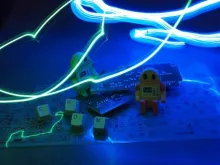
PERFORMANCE. Thomas Stanley and Erica Benay Fallin’s video adaptation of Thomas's evening performance at the conference, “Silent Beacon.” Erica is on the treated autoharp, and Thomas, electronics and effects. Describes Thomas: “The surface of the water is a turbulent membrane displaying the dynamics of interference patterns. It is, to us, a text waiting to be read and comprehended.”

Reviews

Published: October 10, 2012

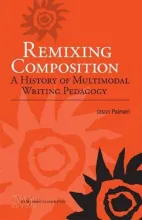
Jason Palmeri, Remixing Composition: A History of Multimodal Writing Pedagogy, CCCC Studies in Writing & Rhetoric (SWR) Series, NCTE, 2012, ISBN: 9780809330898.

Coauthors
Jenna Pack, University of Arizona

Published: October 10, 2012

Ben McCorkle, Rhetorical Delivery as Technological Discourse: A Cross-Historical Study, Southern Illinois University Press, 2012;  

Coauthors
Mariana Grohowski, Bowling Green State University