Issue 10
Image
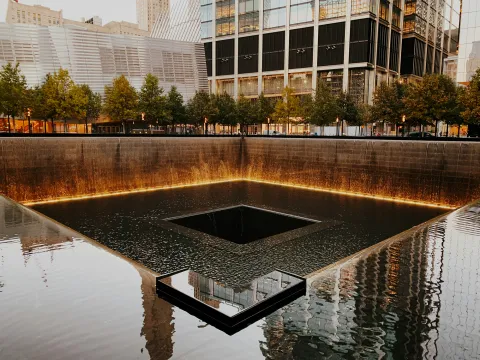
One of the 9/11 Memorial reflecting pools in New York City, with water cascading down its bronze-lit walls into a central void, surrounded by trees and modern buildings at dusk.
Performing Difference
2011

"When faced with movement away from home spaces, a conflict of identity ensues, where conceptions of home must be renegotiated"

—Kathryn Trauth Taylor, “Naming Affrilachia: Toward Rhetorical Ecologies of Identity Performance in Appalachia”
Photo by Jon Tyson on Unsplash
Articles

Kathryn Trauth Taylor
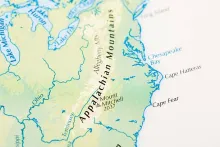
For decades, the voices of African Americans within Appalachia went unacknowledged. Perceptions of the region’s diversity were limited by stereotypes that portrayed Appalachians as mountain dwellers who were primarily white. In response to a long history of exclusion, African American and Appalachian poet Frank X Walker created the term Affrilachian in 1991 to name African Americans who considered themselves part of Appalachia but who were not accounted for in traditional, albeit stereotypical, understandings of the region.
Tara Pauliny
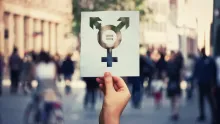
Although queer theory is most often recognized in relation to sexuality and gender identity, it is, at its heart, about disruption. It is an approach that most often encourages subjects to recognize the shifting and unstable nature of their positions and identities and to work toward an unveiling and ultimately, destruction, of regulatory norms.
Serkan Gorkemli
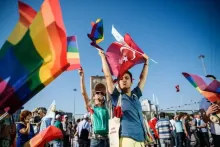
In 2007, Kaos GL, a bimonthly publication of the Kaos Gay and Lesbian Cultural Research and Solidarity Association in Ankara, Turkey, devoted its November/December issue to “Turkiye’nin Gay Ikonlari” (Turkey’s Gay Icons). The magazine surveyed readers and published a list of the ten most popular gay icons in Turkey.
Ericka Reynolds and Carmen Kynard
This is an essay written by me, a first year-college student, Ericka, and me, as professor, Carmen, in a first semester college composition class. The theme for the course was “Community Cultural Wealth and the Written Word,” with community cultural wealth serving as a link to work in educational studies related to Critical Race Theory (CRT).