Issue 9
Image
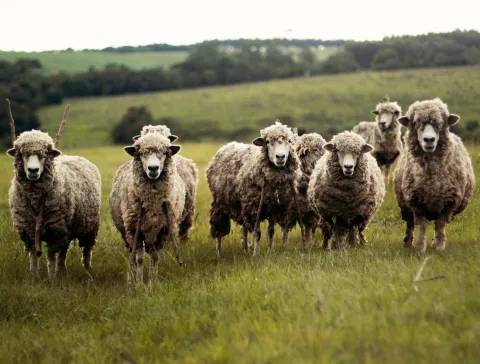
a flock of sheep stare back at the camera
Scenes of Identification
2010

"By resisting the inducement to stabilize our professionalize identities, we as readers also have a means to develop strategies for building temporary alliances with colleagues in and beyond our field"

— Julie Jung, “Rhetoric and Composition’s Emotional Economy of Identification”
Photo by Ariana Prestes on Unsplash

Articles

James J. Brown, Jr.
When I say that Diane Davis' Inessential Solidarity “comes after” community, you might assume that this book suggests the possibility of a “post-community” world. You might also put it in a certain category of books—say, with Terry Eagleton’s After Theory—that evokes a temporal after, suggesting that community is something we can “get over” or “get past.”
Julie Jung
As a rhetorician, I'm concerned when debates are resolved through strategies that elide subject formation's complexities or silence procedural questions through commonplace definitions. Rather than assuming agreement on what constitutes valuable work, I argue we should locate debates at the level of procedure and ask: what should we do with them?
Zosha Stuckey
My interest in recovering the rhetorical histories of these women began here with the idea that women with disabilities have not been given the sort of historicity or rhetoricity they deserve. My role as researcher arose not only out of a “passionate attachment” to uncovering ways that women with disabilities have asserted themselves rhetorically, but also from the idea that studies of disability and rhetoric must move beyond analyses of exploitation.
Amy Dayton-Wood
In recent years the United States has experienced an influx of Spanish-speaking residents and increased visibility of the Spanish language as multilingualism becomes the new norm. In Alabama, where I live, for instance, a push for English Only has attracted national notice. The campaign for English Only in the American South is not a new development but rather has endured for over a decade, sparking heated and often inflammatory rhetoric.

Reviews

Published October 1, 2010

Kim Donehower, Charlotte Hogg, and Eileen Schell, Rural Literacies, Southern Illinois UP, 2007, 192 pages, ISBN: 9780822961079
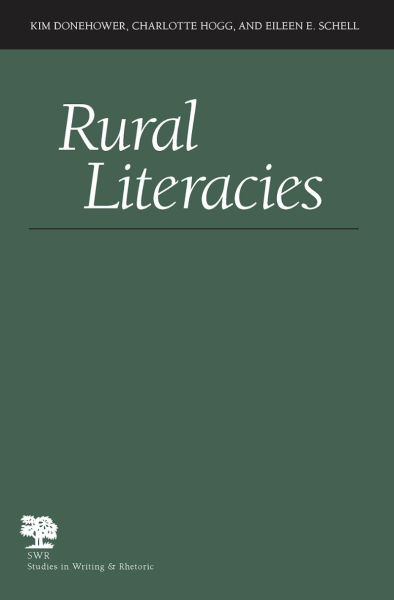
Cover image Rural Literacies


Most composition and literacy scholars are aware of the effects that identity may have on the writing and reading abilities of our students. Numerous texts have examined literacy, rhetoric, and composition from racial perspectives, ability perspectives, and gendered perspectives. Yet the effects that rurality may have on literacy and writing has received less attention in scholarship. Professionals in literacy and composition have a predisposition or preference for examining urban life and location in literacy and writing but few explore rural ways of knowing. Two books exploring rural literacy and composition immediately come to mind: Shirley Brice Heath’s Ways With Words and Rural Voices: Place Conscious Education and the Teaching of Writing, edited by Robert Brooks. Kim Donehower, Charlotte Hogg, and Eileen E. Schell recognize this deficiency and bring attention to it in their text Rural Literacies. In the text, they cover such subjects as rhetorics of rurality, literacy work in rural communities, prejudices against the rural, and sustainability in rural communities through literacy initiatives. Their work proves to be an important contribution to studies of rurality and geography in composition and literacy, even though their analysis of social conditions and literacy amongst rural community members seems idealistic in regards to their construction of social class, race, and gender relations. In addition, their work serves as a welcome demonstration of the ways academia may bridge the public/private divide.

Coauthors
Paula Webb Battistelli, Huston-Tillotson University