
Issue 34
Image
Abstract image of a human figure behind rippled glass, hands pressed forward, face distorted by vertical waves of light.
Affect, Sound, and Surveillance in Networked Publics
2023

“We can choose to not situate ethos as shaped only from the glorious, virtuous, positive statements of rhetors talking about themselves in respectful terms but from what audiences are willing to swallow, not merely from norms that they are eager to praise.”

—David Gruber, “Ecologies of 'Sleepy Joe' and 'Mini-Mike': The Affective Politics of Ethos and the Ethics of Ad Hominem Light"
3D render by Alex Shuper for Unsplash+


Articles


Victoria Gallagher, Cynthia Rosenfeld, and Conner Tomlison
The Virtual Martin Luther King (vMLK) Project is the name for the collective audio and visual experiences, as well as pedagogical techniques and community events, produced by a re-enactment of Martin Luther King, Jr.’s 1960 speech, “A Creative Protest,” which is commonly known as the “Fill Up the Jails” speech.
Nina Feng
“Ok,” Steve says. “You gotta roll 3D6 for your P.P.E.” And like that, my vision of post-apocalyptic Earth dissipates. Steve’s the Game Master for Rifts, a tabletop roleplaying game (TRPG), and the one who decides the main narrative in which we’re all implicated. He tells the story, and he’s helping me create my character sheet before the group convenes at 6pm.

James Rushing Daniel
In his 2021 polemic, How to Blow Up a Pipeline, activist and human ecology scholar Andreas Malm stages a defense of sabotage in the context of climate change. Framing capitalism’s rapacious appetite for energy as the primary source of environmental ruin, Malm asks, “When do we conclude that the time has come to also try something different? When do we start physically attacking the things that consume our planet and destroy them with our own hands?” (8).

S. L. Nelson and Annette Vee
Symptoms of the COVID-19 pandemic include a dry cough, a high fever, and an unprecedented influx in the use of networked technology. Illustrating the latter trend is the increased use of the popular videoconferencing platform Zoom, which grew from 10 million meeting participants in December 2019 to over 200 million in March 2020 when nearly every educational institution in the United States shifted to remote learning (Yuan).
Thomas Lawson
You, like many others, are obsessed. Whether it’s music, sports, food, beer, films, books, or something else, there is likely a social media platform dedicated to your obsession: discussing, cataloging, rating, and reviewing it. You register on these platforms out of obsession but you are just as interested in what others have to say and what others know. At heart, your registration is grounded in a desire to join an online community and learn from others.
Oren Abeles
After the 2017 Las Vegas mass shooting, there were widespread calls to prohibit a firearms accessory called a “bump stock.” The shooter equipped his rifles with these devices, which simulate fully-automatic fire (multiple shots with a single trigger pull) in semi-automatic rifles (shooting only one bullet for each trigger pull).
Derek M. Sparby
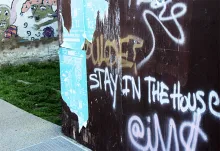
In summer 2019, Carlos Maza, a gay Latino video creator and producer for Vox, took to Twitter to call out YouTube for not enforcing their harassment and cyberbullying policies. He linked to a video mashup of Steven Crowder, an extremist conservative YouTuber with a large following, repeatedly calling Maza homophobic and racist slurs across multiple videos. In one tweet, he explains that Crowder’s fanbase doxxed[1] him in 2018; he includes a screenshot of a small portion of the hundreds of text messages saying “debate steven crowder” (@gaywonk, “Last year, I got doxed . . . ”).

Reviews

I first read Sarah Hallenbeck’s Claiming the Bicycle: Women, Rhetoric, and Technology in Nineteenth-Century America in February of 2020, five years after it was published. This was before the pandemic changed our lives, ushering us into the “Zoom Era.” At first, I resented having to use Zoom.
Coauthors
Millie Hizer, Indiana University Bloomington
The timeliness of Jennifer Clary-Lemon’s Planting the Anthropocene (2019) is evident as climate change effects become more and more apparent. 2020, for example, was tied with 2019 as the hottest years on record; over five million acres burned in California, Oregon, and Washington last summer; Arctic glaciers are yearly losing more ice than can be found in the European Alps; 2020 saw so many big storms in the Atlantic Ocean that the World Meteorological Organization exhausted the English alphabet and had to switch to Greek; honeybee populations are further being decimated by Asian giant hornets in North America; and a historically severe drought is affecting much of the western half of the US, with the US Drought Monitor map showing large areas in either “severe” or “exceptional” categories.
Coauthors
Shannon Kelly, Michigan State University
If in Awful Archives Jenny Rice envisions evidence as a process to productively engage with “bad” evidence, then it is appropriate that my own reading practices have gone, well, badly. I received Awful Archives in fall 2020 and read it in stops and starts in my home-turned-office over the course of many months.
Coauthors
Bess R. H. Myers, University of Illinois, Urbana-Champaign
I try to be a good materialist. I like to think Bruno Latour would consider me a responsible terrestrial, and I hope Donna Haraway would find me staying with the trouble by collecting stories for accountability and invention. But it’s hard. Diana Coole and Samantha Frost explain that new materialism is necessarily concerned with biopolitics, environmental interconnectedness, and “potential sources of rupture immanent to the system and its reproduction” (31).
Coauthors
John Purfield, University of South Carolina
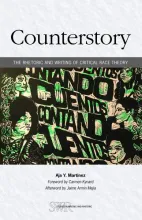
Counterstory: The Rhetoric and Writing of Critical Race Theory is something of a happy misnomer. The title implies that Aja Y. Martinez’s book is a conventional history or genealogy of Critical Race Theory (CRT) with a consideration of its value for rhetoric and writing studies.
Coauthors
Alexis Rocha, San José State University
Ryan Skinnell, San José State University