
Issue 6.1
Image
Busy library interior with people on staircases and stained glass windows in the background.
Cultural and Critical Pedagogies
2008

"How do we actively forge collectivities through the rhetorics of the everyday friendship, spaces of participatory conviviality, across borders that are local, military, policed, facilitated, and managed?"

—Rachel Riedner, "An Introduction Without Guarantees: Conviviality in the Time of Neoliberalism"
Photo by redcharlie on Unsplash
Articles

Rachel Riedner
In early July of 2006 and 2007, a group of sixteen university-based cultural workers and faculty got together for a two-day works-in-progress discussion at the George Washington University in downtown Washington, DC. Our objective was to create a space for discussion, collaboration, exchange, and friendship among university teachers and scholars who work in the DC metropolitan area.
Randi Gray Kristensen
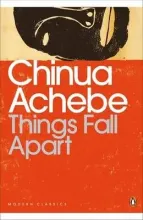
Most accounts of using African and African Diaspora texts in composition focus first on their significance for students of African descent, and second on the ways they demonstrate specific African American tropes. I focus on how such texts are also significant in multicultural classrooms. I argue that they deconstruct disciplinarity and Eurocentricity, as well as draw fresh attention to the power of language, and language as power.
Ryan Claycomb
In the December 2005 issue of College Composition and Communication, a team of investigators from the Stanford Study of Writing, including Jenn Fishman and Andrea Lunsford, offered up “Performing Writing, Performing Literacy” which lays out in compelling ways how performance is already a significant system in developing student literacy, and the ways that it already is and more comprehensively could be integrated into student writing, and into our teaching of that writing.
Phyllis Mentzell Ryder
When we teach students to consider public writing in terms of a unified public sphere, we lose the opportunity to examine the ideologies inherent in the structures of public discourses—both the dominant discourse and others. And, we lose an opportunity to investigate how publics work with and against each other’s discourse conventions as they struggle for recognition and power in the democratic framework. I propose pedagogy that teaches students to practice the rhetorical moves of creating, entering, and challenging (multiple) publics.
Tanya L. Shields
Literature and theatre offer a corrective, using metaphor, nation languages, and character-driven storytelling to genuinely engage with power dynamics and spark new thinking. For the author, these art forms also serve as a scholarly mirror—prompting reflection on research methods, relationships to power, and citizenship, particularly through the lens of Caribbean political and poetic experience.
Samantha A. Murphy
The age of Tudors and Stuarts, Shakespeare and Milton, absolute monarchy and nascent republicanism is where I spend the majority of my research hours. When I received the invitation to participate in this special edition devoted to cultural studies and critical literacies, I was intrigued but uncertain how my own work would engage with the larger thematic conversation envisioned between the papers’ authors and across the various disciplines we represent. What we all have in common, though, is a firm belief in granting detailed attention to rhetorical practices (both discursive and the material representations that discursivity engenders).
Aliya Weise
On the first day of class, an unconventional teaching approach consistently drives a few students away. Though no single element seems radical on its own, the cumulative effect—capped off by an unorthodox grading policy—sends some students fleeing toward more traditional classrooms.