Issue 32
Image
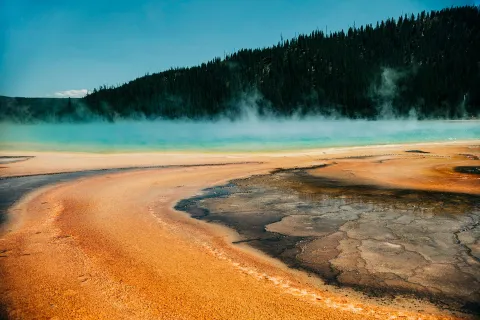
A steaming hot spring with vivid bands of orange, yellow, and turquoise water, with forested hills in the background.
Rhetorics and Literacies of Climate Change
2020

"Given that species decline is happening at such an advanced rate, it is crucial that we work to think differently about the singular autonomy of human agency and the reliability of a human-centered rhetoric."

—Jennifer Clary-Lemon, "Examining Material Rhetorics of Species at Risk"
Natalie Behn For Unsplash+
Articles

Eileen E. Schell, Charlotte Hogg, and Kim Donehower
How should the field of rhetoric and writing studies be engaged in the vital and pressing conversations and actions surrounding climate change? In the immediate summer months that followed the 2018 RSA conference, urgency for this special issue increased as destructive wildfires in California raged. Within this context in 2018, we composed a call for papers for a special issue of enculturation to address the rhetorics and literacies surrounding climate change and the adaptations and organizing strategies being developed to address its effects.
Jennifer Clary-Lemon
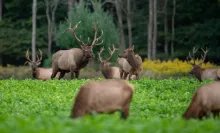
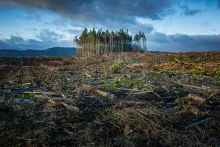
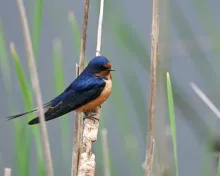
Martes americana atrata. Gulo gulo. Tyto alba. Clemmys guttata. Bufo cognatus. Danaus plexippus. Hirundo rustica. These are the names of our kin who are disappearing so swiftly that we barely got a chance to learn their names: American marten. Wolverine. Barn owl. Spotted turtle. Great Plains toad. Monarch butterfly. Barn swallow. The rapid decline of these and other species—up to 1,000 times the historic rate is because of five major anthropogenic factors: climate change, human development, hunting and fishing, pollution, and invasive species (Diaz et al.).
Rich Shivener and Dustin Edwards
This article focuses on what we call the environmental unconscious of digital composing, a transnational condition dependent on big data infrastructure placed around the world. As many scholars, journalists, and advocacy groups have articulated, big data comes at a big environmental cost.
Michelle Comstock
In 1871, a year before Yellowstone became the country’s first national park, geologist Ferdinand Hayden, photographer William Henry Jackson, and painter Thomas Moran produced a multimedia exhibit of photographs, paintings, and geological specimens documenting Yellowstone’s “unique geology” and arguing for its conservation (McWhorter 9). The collection was pivotal in persuading senators, representatives, and then president Ulysses S. Grant to preserve the 3,500-square-mile park.
Stacey Stanfield Anderson, Kiki Patsch, and Raquel Baker
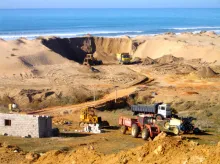
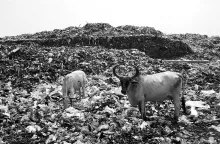
Sand mining is the global environmental crisis you’ve probably never heard of and a rarely invoked topic in discourses on climate change and environmental justice. Demand for sand—an integral component of construction and electronics manufacturing—has tripled over the past two decades, making it the world’s second-most extracted and traded resource behind only water.
Julie Collins Bates
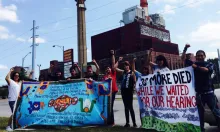
The story of environmental injustice and environmental racism in the United States is a long, complex one that has been occurring for centuries. It began in the moment in which colonization of the Americas occurred and has continued, in myriad forms, since then. The contemporary environmental justice movement in the United States originated in response to this ongoing colonialism, combining tenets of social justice with an emphasis on how people of color in particular suffer disproportionately from exposure to toxic pollutants and environmental health problems at the same time they often are ignored during decision-making processes that affect their communities (Dickinson).
Karrieann Soto Vega
If we ask our students to document and explain contemporary circumstances of climate change, they may be tempted to focus on the most recent climate disaster, regardless of where it took place or the socio-political conditions that structure the conditions for disaster. As Danielle Endres notes, “environmental rhetoric scholars continue to confront environmental injustices and ecosystem destruction by examining, deconstructing, and composing anew human relationships to the environment” (315).
Christina Boyles and Kyle Fields
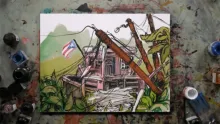
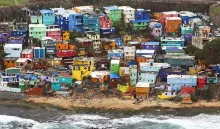
Controlling climate stories is one way that colonialism denies sovereignty to people in the Global South and in marginalized communities across the world. Climate stories are tales that acknowledge, uphold, and share communal knowledge systems to facilitate a transition to more sustainable climate models built on non-Western frameworks. In places like Puerto Rico, colonial structures determine the kinds of climate stories that are “tellable.”
Sweta Baniya
How were Nepali women able to exercise transnational rhetorical agency and ecological literacies through disaster response? This question comes amid reports that suggest women and girls were the most vulnerable citizens during the earthquake and lost their lives because of the assigned gendered roles inside their homes. Nepali women are often categorized as being vulnerable, in need of protection, and without agency; however, the female participants for this project shared an alternative narrative of agency and social action.
Yavanna M. Brownlee
The variations of the Three Sisters story as they exist across North American Indigenous cultures are about more than the poetry of crops growing and their interdependence; they are also about physical human relationships with the land and the organisms that exist there, relationships constellated and connected. The relationship among corn, beans, squash, and humans allows us to understand how these plans are sown in relation to each other. The human participation in Three Sisters stories is significant, exemplified through portraying the sisters as human before they transformed.
Megan Von Bergen, Bethany Mannon
Evangelicals’ intransigence towards climate change is a paradox. Some evangelicals subsequently maintained a limited commitment to environmental advocacy and employed religious terminology, such as “creation care.” However, Barna Group and Pew Research Center polls find that climate change remains a low priority for evangelicals,[2] who are less likely than other practicing Christians or the general public to assert that “humans absolutely caused climate change” (“Are Humans Responsible?”).

Issue Masthead