
Issue 28
Image
A largemouth bass swims underwater in a murky pond.
Entangled Rhetorics
2019

"In concert with a new materialist turn across the humanities, theorists loosely gathered under the heading of rhetorical new materialisms have come to understand rhetoric as emplaced, embedded, and entangled: as an affectability, persuadability, or capacity for attunement to the world and its everyday activities."

—Caroline Gottschalk Druschke, "A Trophic Future for Rhetorical Ecologies"
Unsplash+ Community For Unsplash+


Articles

Caroline Gottschalk Druschke
Actually a single name for two species of fish—the alewife (Alosa pseudoharengus) and the blueback (Alosa aestevalis)—the “river herring” is an anadromous fish: an animal that possesses the stunning capacity to transform its own physiology to thrive in freshwater ponds and rivers, as well as in the salt water of the Atlantic Ocean. For seven years, I have lived an ethnography of migration with these fish, a work held tenuously together by a rhythmic flow, gathering energy from the millions of river herring who, each spring, return from their three-to five-year walkabout in the open ocean to their natal rivers to spawn.
Jake Cowan
Make no mistake about it, for as long as people have been writing on computers, others have been whining about how computers negatively affect writing. Digital technology amplifies how blithely we make mistakes about “its”and “it’s” and other linguistic lapses, or so the trope goes. Case in point, Naomi Baron has suggested that predictive text and autocorrection tools have begun “obviating the need to type carefully, look up words in a dictionary, or simply think” (200).
Julie D. Nelson
In October 2011, a high school cheerleader in­­ upstate New York woke up from a nap with a stutter. Before long, Thera Sanchez’s stutter escalated into Tourette-like symptoms; twitches, jerks, and vocal outbursts became so disruptive that Thera stopped going to school. In the following weeks, eleven more girls at Le Roy High School presented similar symptoms, and parents became frantic as the school district rushed to determine the cause of the illness.
John Silvestro
One[fn] Forewarning: this essay considers individuals accused of racism and child pornography.[/fn]can scarcely go online without engaging someone else’s credibility[fn]I want to thank the three anonymous reviewers for their feedback. Jason Stuart and Tim Lockridge also provided timely and insightful suggestions. I also want to make a particular note of Laurie Gries, whose incredible editorship has shepherded this essay into its current state.
Danielle Koupf
What happens when everyday writing is discarded, forgotten, lost, or even stolen?[i] Consider the Post-it left in a library book, the grocery list forgotten on a store shelf, the letter dropped among the grass. Let loose into the world, these texts embark on untold, unpredictable journeys. Once rediscovered, they pass through new hands and new contexts, undergoing change and reinvention. Some of these found texts eventually appear on the web.

Response Essays

J. Paul Padilla
In this essay, I examine the dyslogistic silence and silencing that followed the visual recognition and alienation of me and my son Ricardo, as well as the dyslogistic silence and silencing of queer Latinos and queer Muslims at vigils for the Orlando Massacre.

Sonic Projects

Andrew Crook, Pierce College

Jeremy Cushman, Western Washington University

Shannon Kelly, Michigan State University

We’re learning that listening functions as a kind of mechanism that allows us to understand the worlds in which we act—the worlds that are disclosed to us—but listening cannot at the same time be part of that understanding. When we talked with each other about our listening practices, we also (and implicitly) talked about the ways we ordered our worlds—about the ways our practices of listening mold and shape our listening.

Tim Richardson, University of Texas at Arlington

Nostalgia can clearly be a cause for action in the present. Calls to make whatever great again or to return to the good old days rely on a certain constituency’s nostalgia for some time previous, whether or not that constituency really experienced that time. Or whether or not that time even really existed that way.  Svetlana Boym calls this kind restorative nostalgia, a nostalgia dedicated to the restoration of origins and conspiracy theories.

Reviews

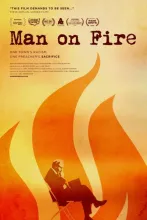
Man on Fire (2017) isn’t an easy film to watch. Writing about Man on Fire wants all of me. This shouldn’t be a problem. Writing about intense documentaries is something I teach routinely. I have a method. Following some initial discussion and invention, the method involves, first, writing what the film is and what it does, a simple chronology.
Coauthors
bonnie lenore kyburz, Northern Illinois University
In 1984, Janice Lauer argued that since its emergence as a field, rhetoric and composition “has been marked by its multimodality and use of starting points from a variety of disciplines” (22). Consequently, boundary-crossing has become a distinctive feature of the discipline as rhetoric and composition scholars continue to bravely cross borders into other disciplines to deepen understandings of—and take risks with—methodologies that may not be familiar.
Coauthors
Brooke Covington, Virginia Tech
In The Art of Gratitude, Jeremy David Engels pursues two timely and important projects. The first is a genealogy of the very idea of gratitude, particularly as it has been packaged and sold in 21st century America. Gratitude, Engels writes, has been purveyed as the solution to all of life’s ills, personal, professional, and—most troublingly—political.
Coauthors
Paul Lynch, Saint Louis University
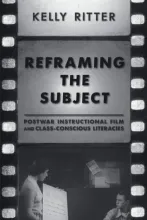
As a scholar and teacher who works with digital video, I’ve been a regular user of the online Prelinger Archive of mid-century instructional films. I’ve taught video composing to students by engaging them in remixing films in the archive, and I’ve sampled the archive in my own collaborative, born-digital scholarship.
Coauthors
Jason Palmeri, Miami University
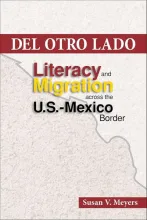
The context for immigration in the United States has become increasingly fraught, with the Trump administration stepping up deportations, detaining and separating families and children, and recently, creating a federal task force that will review the documents of new citizens with a goal of pursuing de-naturalization where possible. The language surrounding these policy changes has embraced and amplified the rhetoric of crisis that has historically permeated discussions of immigration and language variation in the US. Many educators fear the effects of these new policies on our students and communities.
Coauthors
Amy E. Dayton, The University of Alabama
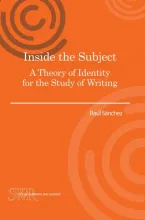
Composition theory is built on a paradox. Writing cannot transcend itself, but written theories of writing imply that it can by presuming a vantage point outside of writing. Rather than attempt to resolve the paradox, Raúl Sánchez’s new book Inside the Subject argues that it is a necessary component of what writing is.
Coauthors
Matthew Halm, North Carolina State University
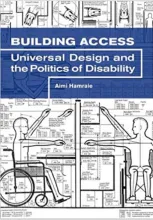
At some higher education institutions, its become increasingly common to frame conversations about accessibility within the concept of universal design. As a concept, universal design holds the promise of reducing barriers to people with learning, mental and physical disabilities through the rethinking of spaces (most often in the built environment, but also digital, and textual).
Coauthors
André Habet, Syracuse University
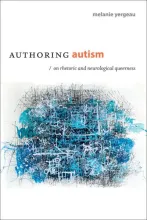
What is the range of the rhetorical? Who does it exclude and how are those ranges expanded, queered, or blown up? Melanie Yergeau’s Authoring Autism takes to task these ideas as an important intervention in the field of rhetoric.
Coauthors
Jay McClintick, Michigan State University

Issue Masthead